Fashion Designer

Spring Summer Trends 2022/23: "Pearls from Southeast Asia"
Fashion Art Toronto, Canada
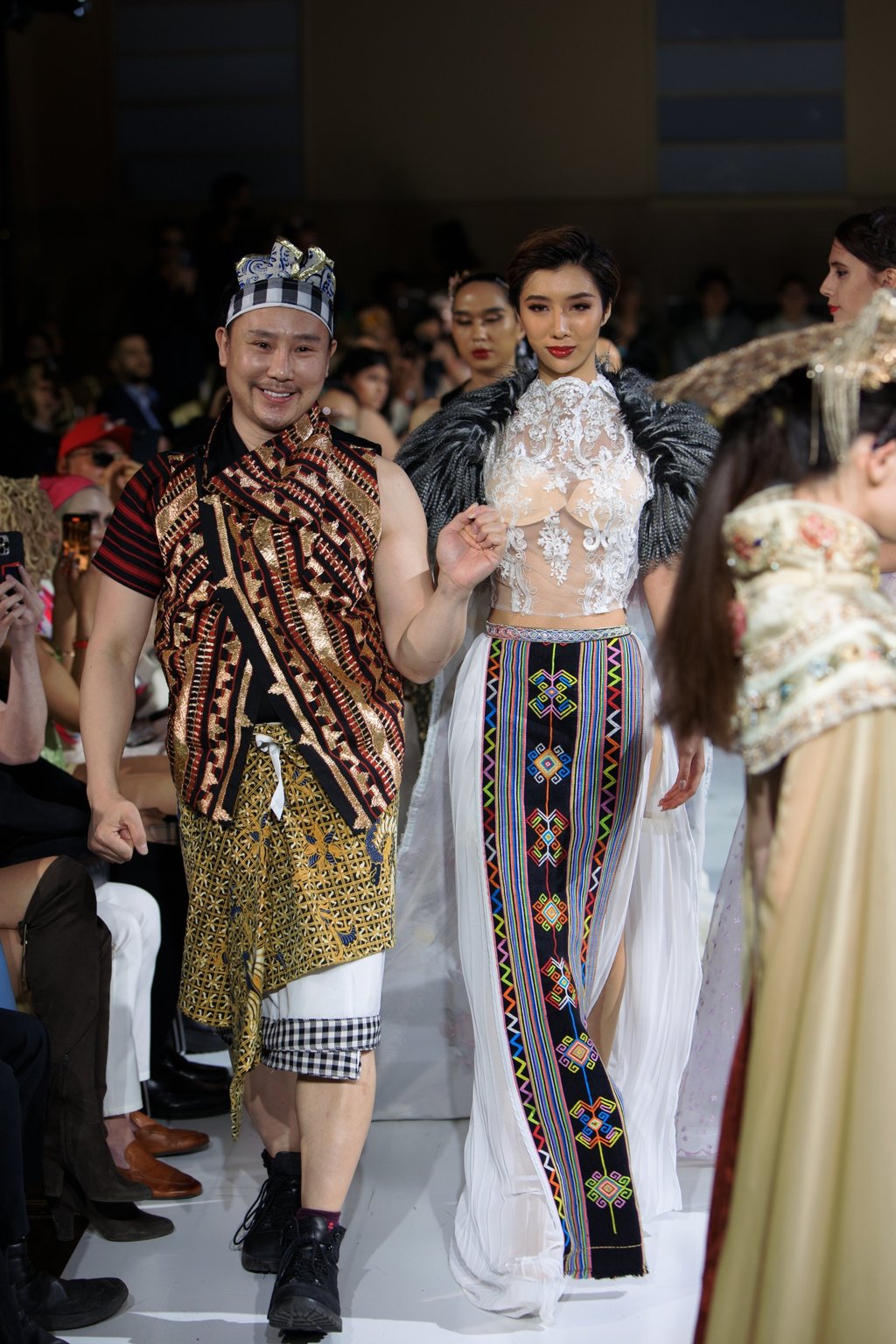
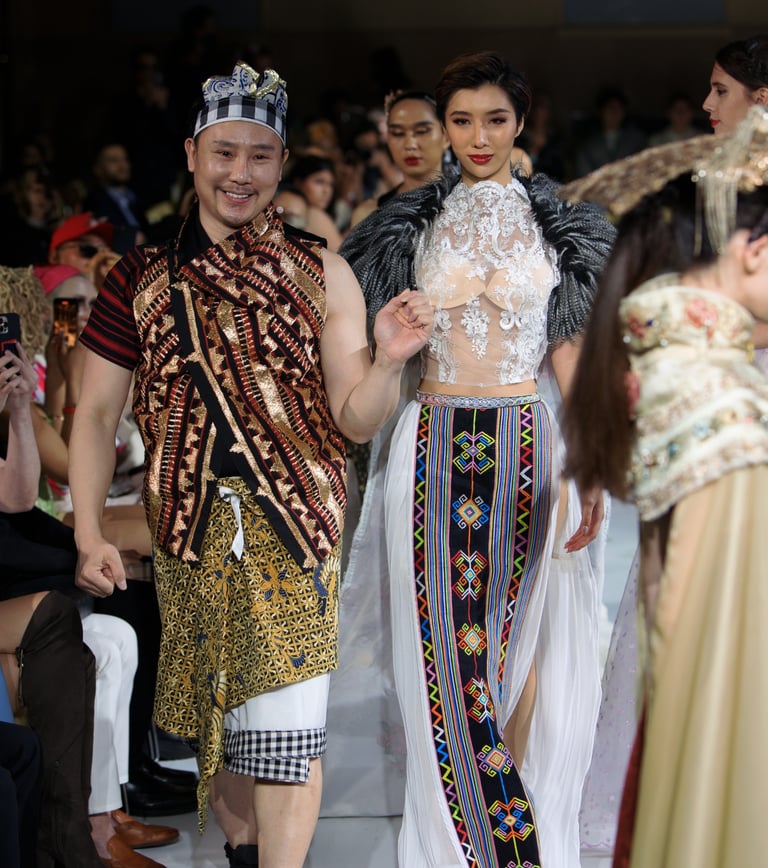
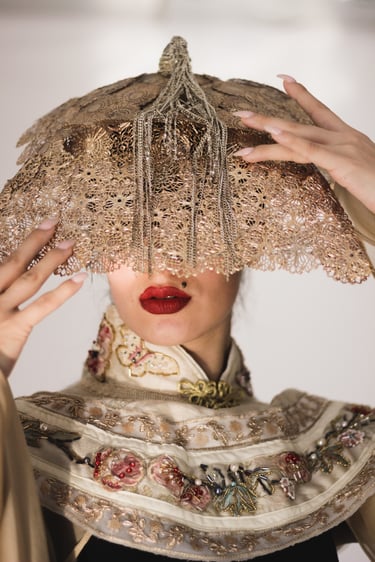
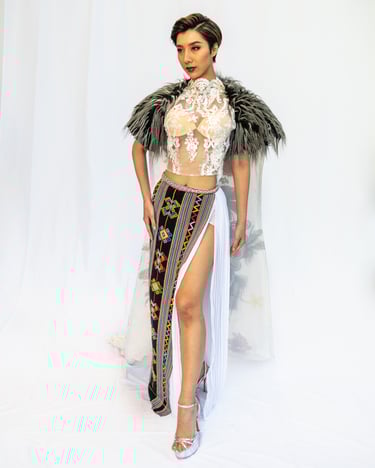
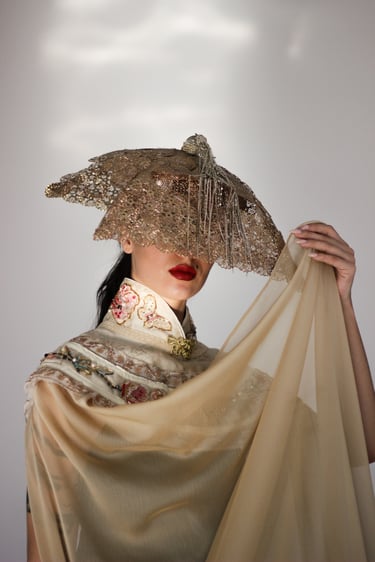
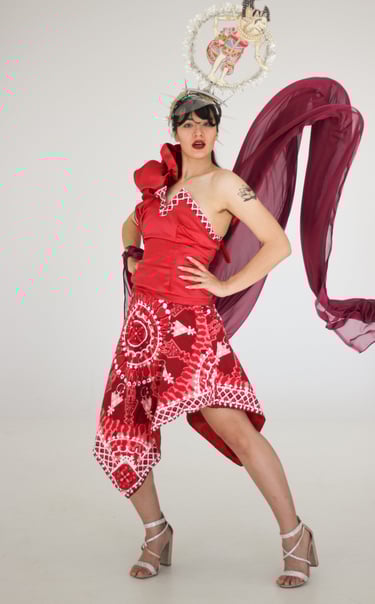
Pearls from Southeast Asia unfolded like a traveller’s journal translated into cloth: garments that hold place and gesture, each seam a small, deliberate echo of island life. Juan Iskandar gathers the region’s textures—Bali’s molten sunsets, the bustle of Thailand’s floating markets, the carved geometry of Chinese temples—and lets them surface as flattened silhouettes, layered panels and trims that move like shadow puppets. The result is neither costume nor pastiche but a careful, lived translation: clothes that perform, then invite a closer, quieter look.
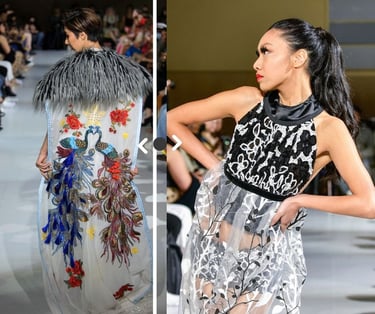
Colour and light do the heavy lifting here. Vibrant reds, deep blacks and purples sit beside soft pastels, a tension between ceremony and the everyday that feels true to the region’s visual rhythms. Surfaces catch the light like wet shells; beading and handwork suggest time and care. The tapis—Indonesia’s symbolic weave—appears not only as motif but as method, its woven logic informing cut and structure so that craft becomes pattern and pattern becomes silhouette.
Wayang, the Javanese shadow‑puppet theatre, is the collection’s structural whisper: flattened planes, ritualised movement and theatrical ornamentation shape how each piece reads on the body. Rather than copying iconography, the designs borrow wayang’s grammar—gesture, pause, layered storytelling—so that a walk down the runway reads like a short performance, each look a sentence in a longer cultural conversation.
Pearls operate as the organising metaphor: small, luminous, formed slowly. Each garment is presented as a pearl of cultural memory, polished into a contemporary object that carries time and provenance. That metaphor keeps the collection humble; it asks viewers to consider accumulation and care rather than spectacle, to see beauty as something grown and tended rather than instantly manufactured.
The overall tone is reverent without being reverential. There is theatricality, yes, but it is balanced by wearability and an attention to material honesty. The clothes feel ceremonial and intimate at once—suitable for a stage, but also for the body that moves through daily life. Sustainability and mindful making are implied in the emphasis on handwork and provenance, turning visibility into responsibility rather than mere display.
Seen as a whole, Pearls from Southeast Asia reframes regional rituals and landscapes as wearable memories: quiet, luminous and insistently human. It asks the wearer to carry story with dignity, and asks the viewer to look longer, listen closer, and recognise that fashion can be a form of cultural stewardship as much as it is an act of style.